Loading... Please wait...
Questions?

See our FAQs or Contact Us.

Need Emergency Help?


Go to The Squirrel Board for live online help for pets or injured/orphaned wildlife.

Florida Dept. of Agriculture Registered Feed Master, 2009-10 Feed Registrant #1501

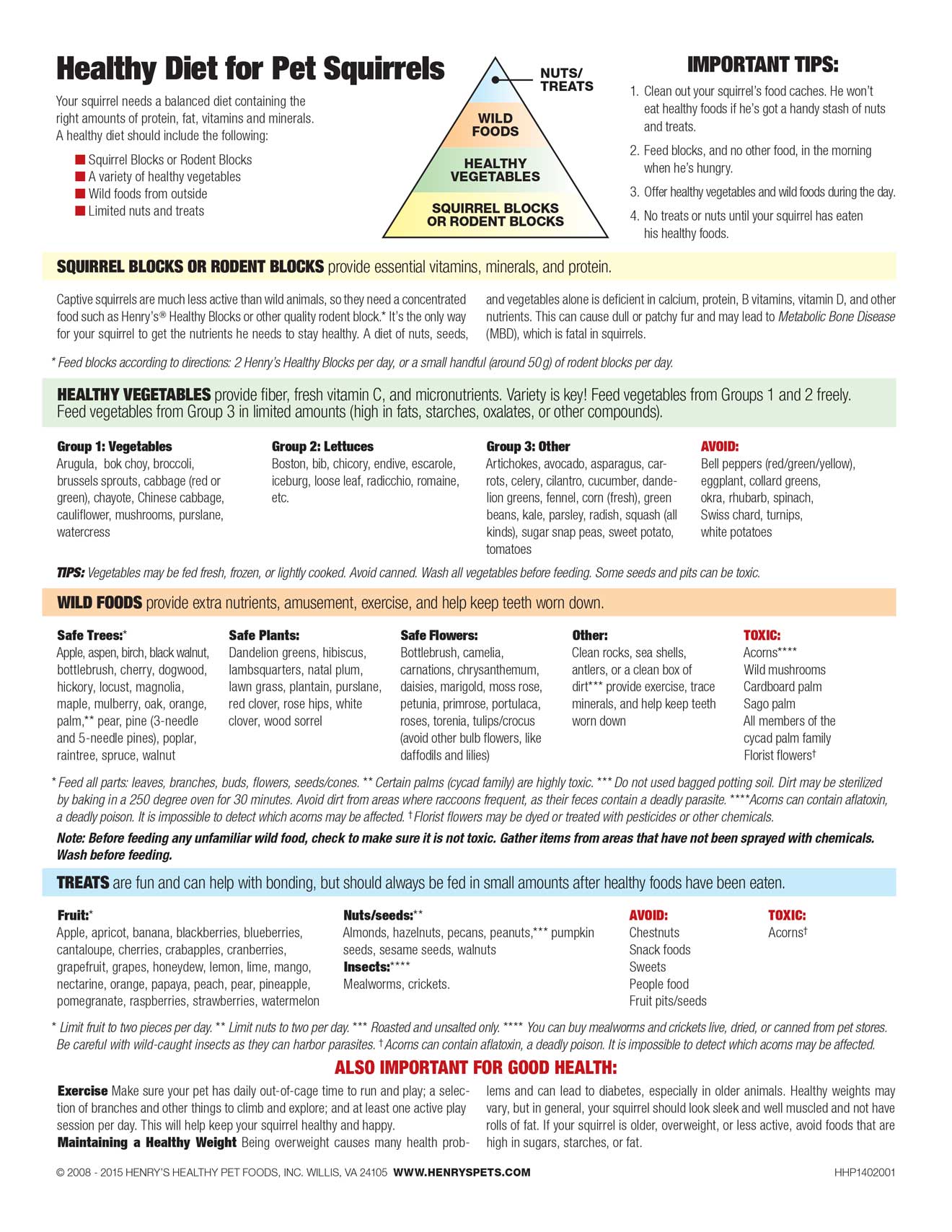
Healthy Diet for Pet Squirrels and Flyers

Your pet needs a balanced diet containing the right amounts of protein, fat, vitamins and minerals. A healthy diet should include the following:

  • Henry's Healthy Blocks
  • A variety of healthy vegetables
  • Wild foods from outside
  • Limited nuts and treats

Henry's Healthy Blocks
These provide the essential nutrients: protein, fat, vitamins, and minerals.

A diet of nuts, seeds, and veggies alone is deficient in calcium, protein, and other nutrients like B vitamins. This can cause dull or patchy fur and lead to metabolic bone disease (MBD). Pets are much less active than wild animals, so they need a concentrated food like Henry's Healthy Blocks. It's the only way for your pet to get the nutrients he needs to stay healthy.


Healthy Vegetables
These add fiber, fresh vitamin C, and micronutrients. Variety is key! Don't let your pet get hooked on just one veggie.

  • artichokes
  • arugula
  • asparagus
  • avocado*
  • Belgian endive
  • bell peppers
  • bok choy
  • broccoli
  • brussels sprouts
  • cabbage
  • carrots**
  • cauliflower
  • celery
  • chayote
  • cherry tomato
  • chicory
  • Chinese cabbage
  • cilantro, fresh
  • collard greens
  • cucumber
  • dandelion greens
  • escarole
  • fennel
  • green beans
  • kale
  • lettuce, all kinds
  • mushrooms
  • mustard spinach
  • okra
  • parsley, fresh
  • pumpkin**
  • purslane
  • radicchio
  • radishes
  • romaine
  • squash, winter**
  • squash, yellow**
  • sugar snap peas
  • sweet potato**
  • Swiss chard
  • watercress
  • zucchini

Wild Foods
These provide extra nutrients, amusement, exercise, and help keep teeth worn down.

  • acorns
  • antlers
  • bottlebrush flowers
  • branches*
  • carnations**
  • chrysanthemums**
  • dandelion greens
  • hibiscus, all parts
  • lambsquarters
  • magnolia cones
  • maple seeds
  • palm nuts & fronds***
  • pine cones
  • purslane
  • plaintain
  • roses**
  • rose hips
Other:

Tree branches, clean rocks, sea shells, and a box of clean dirt provide exercise, trace minerals, and help keep teeth worn down.

Before you feed an unfamiliar wild food, always make sure it's not toxic!


Treats
Treats are fun and can help with bonding, but should always be fed in small amounts.

    Fruit:
  • apple
  • apricot
  • banana*
  • blackberries
  • blueberries
  • cantaloupe
  • cherries, sweet*
  • cherries, sour
  • crabapples
  • cranberries
  • grapefruit
  • grapes*
  • honeydew
  • kiwi
  • kumquat
  • lemon
  • lime
  • mango*
  • nectarine
  • oranges
  • papaya
  • peach
  • pear
  • pineapple
  • pomegranate*
  • raspberries
  • strawberries
  • watermelon
    Insects:
  • Mealworms, moths, grubs
    Nuts/Seeds:
  • acorns
  • almonds
  • hazelnuts
  • pecans
  • pumpkin seeds
  • sesame seeds

Also Important for Good Health:

Exercise.Make sure your pet has daily out-of-cage time to run and play; a selection of branches and other things to climb and explore; and at least one active play session per day. This will help keep her healthy and happy.

Maintaining a Healthy Weight. Being overweight causes many health problems and can lead to diabetes, especially in older animals. Healthy weights may vary, but in general, your pet should look sleek and well muscled and not have rolls of fat. If your pet is older, overweight, or less active, avoid foods that are high in sugars, starches, or fat.

Tips:
  1. Clean out your pet's food caches. He won't eat healthy foods if he's got a handy stash of nuts and treats.
  2. Feed 1 or 3 blocks, and no other food, in the morning when he's hungry.
  3. Offer healthy veggies and wild foods during the day.
  4. No treats or nuts until your pet is eating his healthy foods.
  • Feed Henry's Healthy Blocks in the morning, when your pet is hungriest.
  • Some pets enjoy frozen veggies.
  • Wash all veggies before feeding.
  • Avoid spinach; it is high in oxalates, which can block calcium absorption.
  • *Avocado is high in fat. Pits and skins can be toxic.
  • **Very high in vitamin A. Limit to 2 tablespoons per month.
  • Provide fresh wild foods or branches every day.
  • Only feed items that have not been treated with chemicals or pesticides.
  • *Make sure the tree or branch isn't toxic.
  • **Avoid florist flowers; they are often dyed or treated with chemicals.
  • Don't let your pet eat people food. If he learns to love sweets and snacks, he'll be less likely to eat healthy foods.
  • Feed treats at the end of the day, after healthy foods are eaten.
  • Limit nuts to 1-2 per day.
  • Wash fruit before feeding.
  • Limit fruit to 1 small piece per day to avoid overweight and diabetes.
  • The pits and seeds of some fruits can be toxic, except for berries.
  • *High in sugars/starches. Do not feed these every day!